How Visa Document Review and Verification Works
Applying for a visa can be an exciting step toward studying, working, travelling, or joining family abroad. However, the application process often involves a large collection of documents, and even a small inconsistency can create unnecessary delays or questions. This is where careful document checking becomes important.
Visa Document Review and Verification is the process of examining application documents to identify missing information, inconsistencies, unclear evidence, or other potential issues before an application is submitted. A structured review can help applicants understand whether their paperwork is organised and whether the documents support the information provided in the application.
What Is Visa Document Review and Verification?
Visa Document Review and Verification involves systematically checking the documents included in a visa application. The exact requirements depend on the destination country, visa category, applicant's circumstances, and current immigration rules.
A review may consider whether documents are complete, readable, consistent, current, and relevant to the application. It may also identify areas where additional evidence or clarification could be required.
The purpose is not to guarantee a visa decision. Only the relevant immigration authority can make that decision. Instead, document review helps applicants prepare their paperwork more carefully before submission.
Why Document Review Matters
Visa applications can require passports, financial evidence, educational documents, employment records, accommodation information, photographs, insurance, sponsorship evidence, and other supporting documents. Managing all these requirements can become confusing.
A careful review provides an opportunity to identify problems before the application reaches the decision-making stage. Missing documents, conflicting dates, incorrect names, unclear scans, or unsupported information can make an application more difficult to assess.
Reviewing everything in advance can therefore improve organisation and reduce avoidable administrative problems.
Step 1: Identify the Correct Visa Requirements
The process normally begins by identifying the requirements for the specific visa category. Tourist, student, work, family, business, and other visa routes can have very different documentation requirements.
Applicants should use current information from the relevant immigration authority or official visa application service. Requirements can change, so relying on an old checklist or information from an unrelated visa category can create problems.
A personalised checklist can make the review process more manageable.
Step 2: Collect All Required Documents
Once the requirements are understood, applicants can gather their documents in one organised location. This makes it easier to identify what has already been prepared and what is still missing.
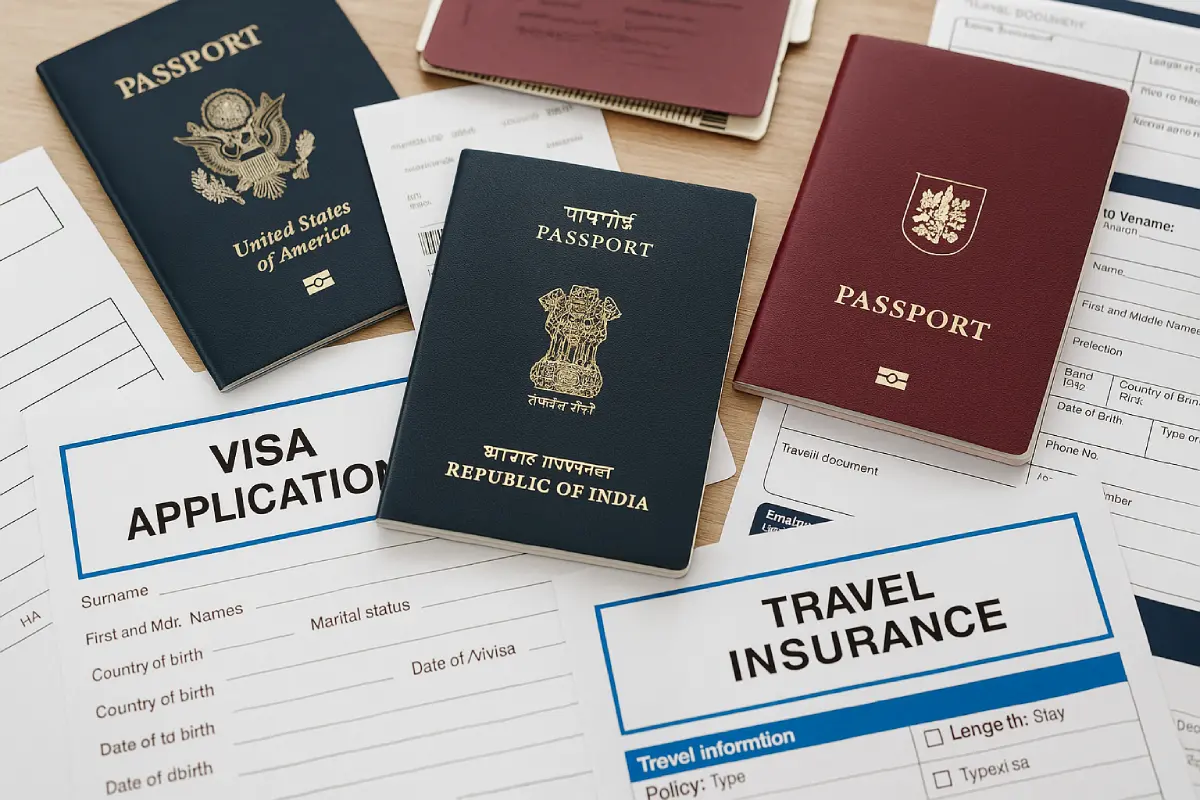
Depending on the application, documents may include:
Valid passport
Application forms
Photographs
Bank statements
Employment evidence
Educational certificates
Admission or sponsorship documents
Accommodation evidence
Travel information
Insurance documents where required
Civil status documents
Supporting letters
Not every applicant will need every document. The correct checklist depends on the individual visa route.
Step 3: Check Personal Information
One of the simplest but most important parts of Visa Document Review and Verification is checking personal information across all documents.
Names, dates of birth, passport numbers, addresses, and other identifying information should be consistent where applicable. Differences may sometimes have legitimate explanations, but unexplained inconsistencies can lead to questions.
Applicants should compare their documents carefully rather than assuming that small errors will automatically be overlooked.
Step 4: Review Dates and Validity
Dates can be particularly important in visa applications. A passport may need to meet specific validity requirements, while financial statements, certificates, letters, or other documents may need to be recent.
Check issue dates, expiry dates, employment periods, study dates, travel plans, and other relevant timelines. The information should make sense as a complete application.
A clear timeline can help applicants identify contradictions before submission.
Step 5: Verify Financial Evidence
Many visa categories require applicants to demonstrate that they meet specific financial requirements. The evidence may vary depending on the visa type and applicant's circumstances.
A review can check whether the relevant financial documents have been included, whether they cover the required period where applicable, and whether the information is consistent with other parts of the application.
Applicants should never alter, manipulate, or misrepresent financial documents. Genuine and accurate evidence is essential.
 Step 6: Check Supporting Documents
Supporting documents should have a clear purpose within the application. For example, an employment letter may support information about a person's job, while an educational document may support their academic background.
During Visa Document Review and Verification, each supporting document can be compared with the information stated in the application. This helps identify situations where a document appears unrelated, incomplete, or inconsistent with the applicant's explanation.
Step 7: Check Document Quality
Even genuine documents can become difficult to assess if they are poorly scanned or photographed. Important information should be readable, and pages should not be unnecessarily cropped or obscured.
Check that:
Text is clearly visible
All required pages are included
Images are not excessively blurred
Documents are correctly oriented
File formats meet the application instructions
Pages are uploaded in the correct order
Good document quality makes the application easier to review.
Step 8: Review Translation Requirements
Applicants may need to provide translations when documents are not in an accepted language. The requirements for translations can vary between visa authorities.
Some applications may require certified translations or specific translator declarations. Before submitting translated documents, applicants should check the current official instructions for their visa category.
Submitting an incorrect translation format can result in additional requests or delays.
Step 9: Compare Documents With the Application Form
A document review should not happen separately from the application form. Information entered in the application should be compared with the supporting evidence.
For example, employment dates should be consistent with employment documents, educational details should match certificates, and financial information should be supported by appropriate records.
This cross-checking is one of the most valuable parts of Visa Document Review and Verification because it can reveal inconsistencies that may otherwise be missed.
Step 10: Identify Missing or Weak Evidence
After checking the documents, create a final list of missing or potentially insufficient evidence. This gives applicants an opportunity to address issues before submission.
However, applicants should avoid adding unnecessary documents simply to make the application appear larger. Supporting evidence should be relevant, genuine, and connected to the requirements of the visa category.
Quality and relevance are generally more useful than excessive paperwork.
How Verification Differs From Review
Although the terms are often used together, review and verification can have different meanings. Review generally involves examining documents for completeness, consistency, relevance, and obvious issues.
Verification may involve checking whether information or documents can be reasonably supported through appropriate sources or evidence, depending on the service and application process.
Importantly, private document-review services cannot replace official immigration checks or guarantee that an authority will accept a document.
Common Problems Found During Document Checking
A structured review may identify several common issues, including:
Missing pages
Expired documents
Inconsistent personal information
Incorrect dates
Unclear scans
Missing translations
Incomplete forms
Unsupported claims
Incorrect document formats
Documents that do not match the application
Finding these issues before submission gives the applicant an opportunity to correct them through legitimate means.
Final Quality Check Before Submission
Before submitting a visa application, review the complete document package one final time. Use the official checklist and confirm that each required item has been addressed.
Make sure the documents are authentic, accurate, readable, and consistent. Keep copies of everything submitted and retain confirmation or receipts where appropriate.
A final review should be systematic rather than rushed. Going through the application section by section can make it easier to spot small mistakes.
Benefits of Professional Document Review
Some applicants choose to use professional assistance when their application involves complicated requirements or a large amount of supporting evidence. A professional review may help organise documents, identify inconsistencies, and explain areas that require further attention.
However, applicants should understand what a review service actually provides. No legitimate reviewer can guarantee a visa approval because the final decision belongs to the relevant immigration authority.
Final Thoughts
Visa Document Review and Verification can make the visa preparation process more organised by helping applicants identify missing information, inconsistencies, document-quality problems, and other potential issues before submission.
The process should begin with the correct visa requirements and continue through document collection, personal-information checks, financial evidence, translations, application-form comparisons, and a final quality review.
Applicants should always provide genuine and accurate documents. A careful review can identify problems, but it cannot guarantee a successful visa decision or replace official immigration requirements.
Ultimately, good preparation can make the application process easier to manage. By checking documents carefully and following the latest official instructions, applicants can submit a more organised and consistent visa application.