
Business & Finance
How Can Self-Service Kiosks Reduce Customer Waiting Times?
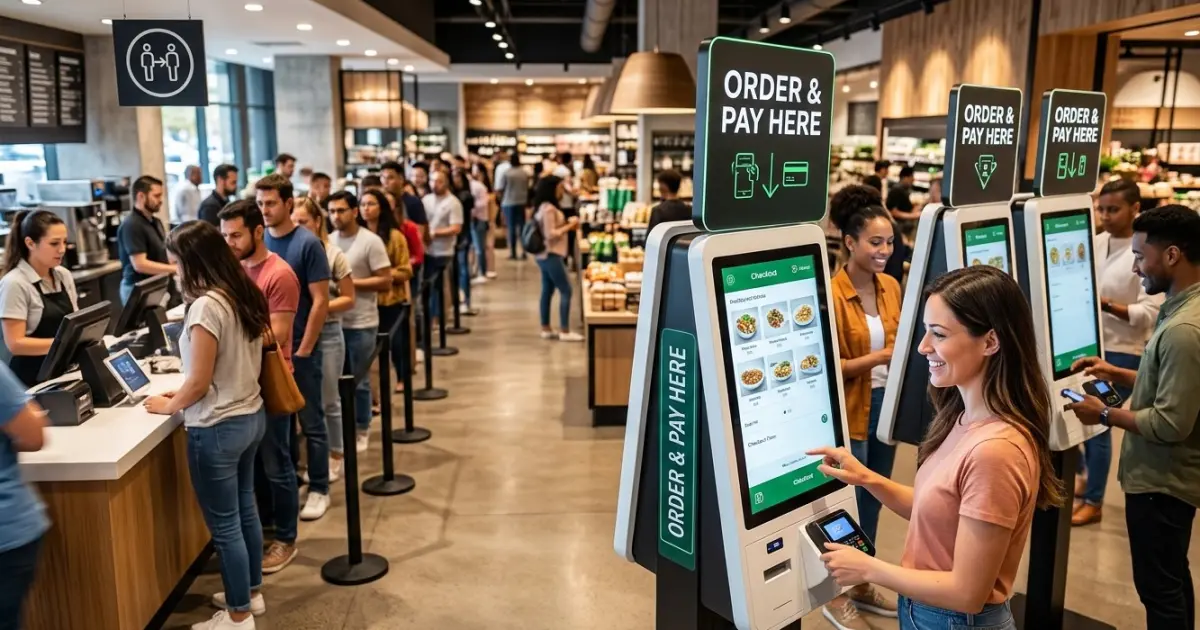
Long queues and slow service can negatively affect customer satisfaction, especially in busy retail stores, restaurants, shopping malls, and service centers. Customers expect quick, convenient, and simple interactions. One technology helping businesses meet these expectations is the self-service kiosk machine.
Self-service kiosks allow customers to perform tasks independently, such as placing orders, making payments, checking information, and registering for services. By reducing the need for staff assistance during routine activities, businesses can improve service efficiency and manage customer flow more effectively.
Businesses researching self service kiosk machine price kuwait can benefit from understanding how these systems reduce waiting times and improve daily operations. Pointus Solutions supports businesses exploring technology solutions for modern retail and commercial environments.
Table of Contents
What Are Self-Service Kiosks?
How Do Kiosks Reduce Customer Waiting Times?
Benefits of Self-Service Kiosks for Businesses
Features That Improve Service Speed
Where Can Businesses Use Self-Service Kiosks?
Factors to Consider Before Buying
Frequently Asked Questions
Conclusion and Call to Action
1. What Are Self-Service Kiosks?
A self-service kiosk is an interactive digital machine that allows customers to access services without depending entirely on employees. These machines usually include a touchscreen and may also support payment terminals, barcode scanners, receipt printers, or other peripherals.
Depending on the software and configuration, customers can use kiosks to order food, purchase tickets, check in for appointments, search for products, or complete payments.
2. How Do Kiosks Reduce Customer Waiting Times?
Self-service kiosks improve customer flow in several ways.
Allow Multiple Customers to Complete Tasks
When several kiosks are available, multiple customers can place orders, make payments, or access information simultaneously. This reduces dependence on a single service counter and helps distribute customer traffic.
Reduce Time Spent on Routine Transactions
Customers can enter their own information, select products, and complete common tasks through guided touchscreen instructions. This can reduce repetitive work for employees and make routine transactions faster.
Improve Order Accuracy
Customers can review their selections before submitting an order. This may reduce misunderstandings caused by verbal communication and help avoid delays associated with correcting mistakes.
Simplify Payment Processes
Kiosks equipped with compatible payment terminals allow customers to complete transactions independently. This can reduce congestion at traditional payment counters.
Improve Customer Flow During Peak Hours
During busy periods, kiosks provide an additional service channel. Businesses can direct customers toward available machines, helping prevent excessive queues at conventional counters.
3. Benefits of Self-Service Kiosks for Businesses
Self-service kiosks offer benefits beyond shorter waiting times.
Better customer experience: Customers can complete routine tasks at their own pace.
Improved staff productivity: Employees can focus on more complex customer requests.
Consistent service: Guided instructions help standardize common transactions.
Flexible operations: Businesses can configure kiosks for different services and customer needs.
Better transaction management: Integrated software may provide useful sales and operational information.
Actual results depend on kiosk placement, software quality, customer adoption, and the number of machines available.
4. Features That Improve Service Speed
Businesses should compare important features before selecting a kiosk.
Responsive touchscreen: A clear and easy-to-use interface helps customers complete tasks without confusion.
Fast processing hardware: Suitable processors and memory help applications operate smoothly.
Payment integration: Compatible payment terminals make independent transactions possible.
Barcode scanning: Integrated scanners can help customers identify products or access information quickly.
Receipt printing: Optional receipt printers provide transaction records when required.
Reliable connectivity: Stable network connections support communication with business applications and payment systems.
5. Where Can Businesses Use Self-Service Kiosks?
Self-service kiosks are useful across different industries:
Restaurants: Customers can browse menus, customize orders, and pay independently.
Retail stores: Shoppers can search for products, check information, or access services.
Hospitals: Patients can check in and manage appointment-related tasks.
Shopping malls: Visitors can use digital directories and information services.
Service centers: Customers can register, submit information, or manage routine requests.
The right configuration depends on the services each business wants to provide.
6. Factors to Consider Before Buying
Before investing, businesses should evaluate touchscreen size, hardware performance, software compatibility, payment options, security, installation requirements, and technical support.
The self service kiosk machine price kuwait may vary according to display specifications, peripherals, software licensing, payment functionality, and installation costs. Businesses should compare the total cost of ownership rather than focusing only on the initial purchase price.
Retailers researching electronic shelf labels price kuwait may also be exploring ways to improve store efficiency. However, electronic shelf labels serve a different purpose: they display product prices and information on shelves, while self-service kiosks support customer interactions and transactions.
Selecting technology according to its intended purpose helps businesses make better investment decisions.
Frequently Asked Questions1. How do self-service kiosks reduce customer waiting times?
They allow customers to complete routine tasks independently and enable multiple people to use separate machines simultaneously.
2. Can self-service kiosks reduce queues in restaurants?
Yes. Customers can browse menus, customize orders, and make payments through kiosks, reducing pressure on traditional ordering counters.
3. Are self-service kiosks suitable for small businesses?
Yes. Small businesses can use appropriately configured kiosks for ordering, payments, registration, and customer information services.
4. What affects self service kiosk machine price in Kuwait?
Factors include screen size, hardware specifications, software, payment options, additional peripherals, installation, and support.
5. Do self-service kiosks completely replace employees?
No. They handle selected routine tasks, while employees remain important for customer assistance, complex requests, and operational support.
Conclusion: Make Customer Service Faster with Self-Service Kiosks
Self-service kiosks help businesses reduce customer waiting times by supporting independent transactions, simplifying routine tasks, and improving customer flow during busy periods. With suitable hardware, user-friendly software, and reliable integration, these systems can contribute to a smoother customer experience.
Businesses comparing the self service kiosk machine price kuwait should carefully evaluate their operational requirements and long-term needs before purchasing. Pointus Solutions is a starting point for exploring technology solutions that support efficient business operations.
Call to Action
Want to improve customer service and reduce waiting times in your business? Visit Pointus Solutions to explore technology solutions and discuss the right options for your business requirements.

0 Comments
No comments yet. Be the first to respond.
Log in to comment