
Digital Marketing
Can Industrial and Commercial Applications Unlock New Opportunities in India's Infrared Thermometer Market?
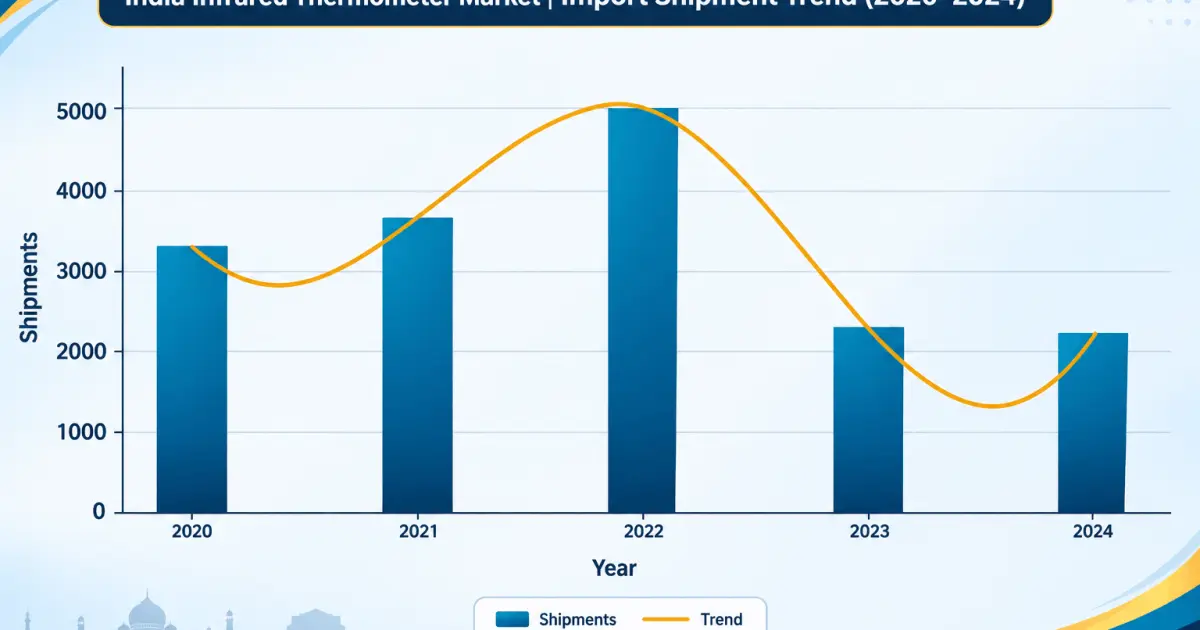
Temperature monitoring is becoming increasingly important across India's manufacturing, commercial, and institutional environments. The India Infrared Thermometer Market is attracting attention as businesses explore non-contact measurement solutions for operational convenience, equipment monitoring, and quality management. Infrared thermometers allow users to measure surface temperatures without direct physical contact, making them useful for applications involving moving equipment, difficult-to-access surfaces, and temperature-sensitive processes. As industrial modernisation and commercial infrastructure continue to evolve, different end-use sectors are creating opportunities for manufacturers and distributors of infrared temperature measurement devices.
Why Are Industries Exploring Non-Contact Temperature Measurement?
Industrial environments frequently involve equipment and surfaces that require regular temperature checks. Traditional contact-based measurement methods may be inconvenient when dealing with moving machinery, hot surfaces, or inaccessible components.
Infrared thermometers provide an alternative by detecting infrared radiation emitted from a target surface.
Their potential industrial benefits include:
Operational convenience: Supports quick temperature checks without touching the measured surface.
Equipment monitoring: Helps maintenance teams identify unusual surface temperature conditions.
Improved accessibility: Allows measurements of certain difficult-to-reach or moving targets.
Reduced interruption: Enables temperature checks without necessarily stopping equipment operation.
However, the suitability of a device depends on its measurement range, accuracy, distance-to-spot ratio, and operating environment.
Which Commercial Sectors Offer Emerging Opportunities?
Commercial establishments also require convenient temperature measurement solutions for different operational activities.
1. Food Processing and Storage
Food processing facilities require temperature monitoring across various production and storage activities. Infrared thermometers can help assess surface temperatures of equipment, packaging, and selected products. They do not measure internal food temperatures, so contact probes remain important where internal temperature verification is required.
2. Retail and Hospitality
Hotels, restaurants, and commercial kitchens may use infrared devices for selected surface temperature checks. Portable equipment can provide convenience during routine operational inspections.
3. Warehousing and Logistics
Storage facilities handle products that may require specific environmental conditions. Infrared thermometers can help personnel conduct quick surface temperature assessments of selected goods and equipment.
How Is Manufacturing Modernisation Influencing Demand?
India's manufacturing ecosystem is increasingly focusing on operational efficiency, equipment reliability, and quality management. These priorities are encouraging businesses to explore modern monitoring instruments.
Manufacturing applications may include:
Checking surface temperatures of machinery and production equipment.
Monitoring temperature variations during selected manufacturing processes.
Identifying potential overheating in accessible equipment components.
Supporting routine maintenance inspections.
Assessing surface temperatures during quality-control activities.
The adoption of suitable infrared measurement equipment can support maintenance teams in identifying conditions that require further investigation.
What Factors Influence Purchasing Decisions?
Industrial and commercial buyers generally evaluate equipment based on performance, durability, and suitability for specific applications.
Important purchasing considerations include:
Measurement accuracy: Reliable readings are essential for meaningful monitoring.
Temperature range: Devices must support the operating temperatures of intended applications.
Build quality: Durable construction is important in demanding working environments.
Ease of operation: Clear displays and simple controls improve usability.
Calibration support: Reliable calibration services help maintain measurement performance.
After-sales assistance: Technical guidance and maintenance support influence long-term purchasing decisions.
Manufacturers that address these requirements can develop stronger relationships with institutional and industrial customers.
What Challenges Could Affect Market Expansion?
Despite the potential opportunities, several factors may influence adoption.
Initial investment: Advanced devices can be expensive for smaller businesses.
Technical awareness: Some users may require training to understand emissivity, measurement distance, and surface-related limitations.
Alternative technologies: Contact temperature sensors and thermal imaging systems compete in certain applications.
Product selection: Different industrial processes require different measurement specifications.
Manufacturers and distributors can address these concerns through product education, application guidance, and competitive pricing.
Where Are the Future Business Opportunities?
The future of the India Infrared Thermometer Market will depend on industrial modernisation, commercial infrastructure development, and demand for convenient measurement technologies.
Potential opportunities include developing application-specific devices, expanding distribution networks, introducing advanced handheld products, and strengthening relationships with manufacturing companies and commercial equipment suppliers.
According to 6Wresearch, the market is projected to grow at a CAGR of 8.1% during 2025–2031. This outlook highlights the importance of understanding changing application requirements and technological developments when evaluating future business opportunities.
Who We Are
About 6Wresearch: 6Wresearch is a commercial strategy and growth advisory firm founded in 2011 and headquartered in New Delhi, India, with partners across Southeast Asia and the Middle East & Africa. The firm has delivered over 20,000 commercial engagements for over 2,000 organizations, including Fortune 500 companies, government agencies, and multilateral institutions such as the World Bank and the Asian Development Bank. Backed by proprietary market research and advanced analytics, 6Wresearch combines sector expertise with data-driven intelligence to help organizations navigate market complexity and drive sustainable growth. These capabilities explain why organizations trust 6Wresearch Global Market Research & Consulting Firm for reliable commercial insights and confident decision-making.
Our Proprietary Platform: 6W Export GTM
6W Export GTM is 6Wresearch's proprietary trade intelligence and go-to-market platform, built on UN Comtrade data and enhanced with 6Wresearch's in-house analytical and simulation models, including system dynamics-based forecasting. Unlike broad, sector-level market sizing tools, 6W Export GTM operates at the individual product level down to specific HS codes and micro-segments to identify precise, actionable export opportunities by country and product pair, including markets where trade currently does not exist. This granular, simulation-driven approach allows 6W Export GTM to surface opportunities that sector-wide analysis typically misses, positioning it among a small number of platforms globally offering this depth of product-and-country-specific export intelligence.

0 Comments
No comments yet. Be the first to respond.
Log in to comment